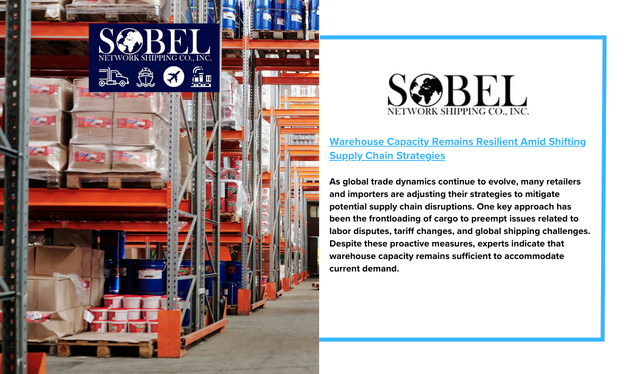
As global trade dynamics continue to evolve, many retailers and importers are adjusting their strategies to mitigate potential supply chain disruptions. One key approach has been the frontloading of cargo to preempt issues related to labor disputes, tariff changes, and global shipping challenges. Despite these proactive measures, experts indicate that warehouse capacity remains sufficient to accommodate current demand.
Frontloading as a Supply Chain Strategy
Frontloading—the practice of bringing in goods earlier than usual—has been a recurring strategy, particularly in response to uncertainties in global shipping. Recent disruptions, such as labor unrest at key U.S. ports, shipping challenges in the Red Sea, and drought conditions affecting transit through the Panama Canal, have all prompted businesses to accelerate their inventory movement.
As shippers navigate these challenges, a focus has been placed on prioritizing essential product categories rather than overstocking warehouses with excess inventory. By taking a measured approach, many have been able to mitigate risk without creating undue stress on supply chain infrastructure.
Impact of Tariffs on Imports
Ongoing tariff adjustments continue to influence shipping patterns. As new trade policies are implemented, importers are strategically increasing shipments ahead of potential cost hikes. This trend is expected to persist as businesses seek to balance costs while ensuring steady product availability.
While tariffs on goods from neighboring countries may not significantly impact seaport activity due to the dominance of other freight modes for cross-border trade, long-term implications could lead to shifts in maritime import volumes.
Warehouse Space Remains Stable
Despite increased cargo movement, warehouse space has not reached critical capacity. Industry experts note that while there has been some pressure due to frontloading, it has not led to widespread constraints. The availability of extensive warehousing infrastructure, particularly in high-traffic regions such as Southern California, has helped absorb fluctuations in import volumes.
Moreover, third-party logistics providers have been leasing additional warehousing facilities, further strengthening the industry’s ability to manage increased inventory. These providers have accounted for a significant share of recent leasing activity, particularly in major port cities where demand for fulfillment space remains high.
Post-Pandemic Investments Supporting Resilience
The warehousing sector has benefited from investments made in the wake of the COVID-19 pandemic. During the pandemic, a shortage of storage space posed challenges for supply chains, prompting an increase in facility construction and expansion efforts. These investments have since enhanced the sector’s ability to accommodate inventory shifts and provide flexibility in distribution strategies.
As businesses continue to adapt to evolving market conditions, e-commerce remains a key driver of warehouse demand. Online retailers, which typically require more storage space than traditional brick-and-mortar operations, are expected to sustain demand for fulfillment centers. Additionally, potential regulatory changes affecting international shipments could further influence warehousing needs in the near future.
Looking Ahead
The current landscape suggests that while global supply chain challenges persist, the warehousing sector remains well-equipped to handle increased inventory levels. Strategic investments and the adaptability of logistics providers continue to play a crucial role in maintaining efficiency and resilience.
As the industry moves forward, businesses will need to stay agile in response to regulatory changes, economic shifts, and emerging trade trends. By leveraging available infrastructure and optimizing inventory management strategies, retailers and importers can continue to navigate the complexities of the modern supply chain landscape successfully.