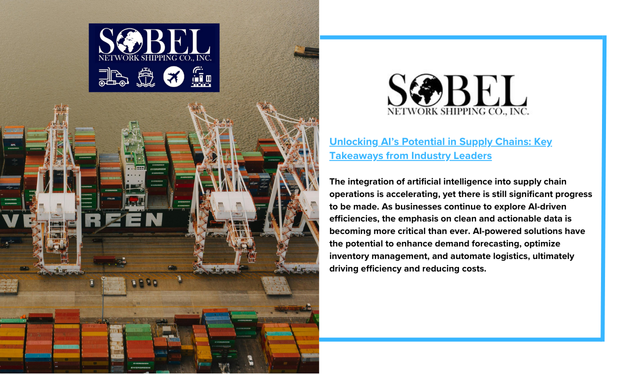
The integration of artificial intelligence into supply chain operations is accelerating, yet there is still significant progress to be made. As businesses continue to explore AI-driven efficiencies, the emphasis on clean and actionable data is becoming more critical than ever. AI-powered solutions have the potential to enhance demand forecasting, optimize inventory management, and automate logistics, ultimately driving efficiency and reducing costs.
Industry leaders at a recent logistics and technology conference highlighted how AI is reshaping inventory management and forecasting, enabling companies to streamline operations and enhance decision-making. However, while AI adoption is expanding, many supply chains still face challenges in data standardization and real-time application. Without accurate and harmonized data, even the most advanced AI models may struggle to generate meaningful insights. Companies that invest in robust data governance and integration strategies will be better positioned to maximize the value of AI.
Beyond AI, broader trends are also shaping the future of supply chains. Experts at the event pointed to evolving global trade patterns, rapid digitization, and the growing impact of climate-conscious regulations as key factors influencing logistics strategies. With trade disruptions and geopolitical shifts, supply chains must remain flexible and responsive to changes in sourcing and distribution. Digital transformation is also playing a crucial role, with cloud-based platforms and Internet of Things (IoT) technology providing real-time visibility and predictive analytics.
Sustainability is another major driver of change in supply chain management. Businesses are under increasing pressure to meet environmental standards and reduce carbon footprints. AI can play a pivotal role in sustainability efforts by optimizing route planning to minimize fuel consumption, improving energy efficiency in warehouses, and aiding in circular supply chain initiatives.
As organizations strive to optimize their supply chain operations, leveraging emerging technologies while adapting to shifting market conditions will be essential. Staying ahead requires not only embracing AI but also fostering data-driven ecosystems that support agility and resilience in an ever-changing landscape. Companies that proactively invest in AI and digital transformation will gain a competitive edge, ensuring their supply chains remain efficient, sustainable, and adaptable to future challenges.