Infrastructure Expansion to Bolster Just-in-Time Supply Chains
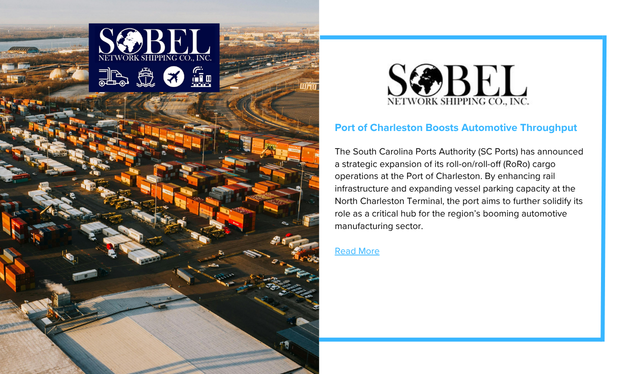
The South Carolina Ports Authority (SC Ports) has announced a strategic expansion of its roll-on/roll-off (RoRo) cargo operations at the Port of Charleston. By enhancing rail infrastructure and expanding vessel parking capacity at the North Charleston Terminal, the port aims to further solidify its role as a critical hub for the region’s booming automotive manufacturing sector.
Key Infrastructure Milestones
-
Expansion Scope: Upgrades focus on optimizing rail connectivity and increasing vehicle staging areas to handle higher volumes of automotive parts and finished units.
-
Timeline: Preliminary work begins this summer with the demolition of an adjacent former paper mill site; full project completion is projected for 2028.
-
Current Capacity: While finalized capacity figures for the expansion are pending, the port’s Columbus Street Terminal currently manages an annual throughput exceeding 250,000 vehicles.
Strategic Importance for the Southeast
South Carolina remains a premier destination for automotive supply chains due to its robust labor pool, established supplier network, and strategic rail access. As of 2025, motor vehicles and parts stood as the state’s leading export commodities, with South Carolina maintaining an 18% market share of U.S. passenger vehicle sales.
These infrastructure investments are designed to support long-term partners—including BMW, Mercedes-Benz Vans, and Volvo Cars—by ensuring the high-velocity movement of components required for just-in-time manufacturing models. Beyond standard passenger vehicles, the port continues to serve as a vital gateway for construction equipment, buses, and heavy-duty trailers.
Regional Competitive Landscape
The Port of Charleston’s initiative arrives amid ongoing regional competition. The Georgia Ports Authority recently solidified its position as a major automotive gateway, handling 779,000 units in 2025 and announcing a $100 million investment in dedicated RoRo berth infrastructure to accommodate larger vessel classes and increased cargo volumes.