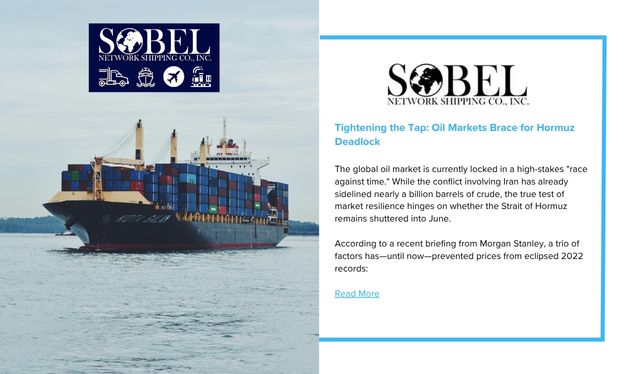
The global oil market is currently locked in a high-stakes “race against time.” While the conflict involving Iran has already sidelined nearly a billion barrels of crude, the true test of market resilience hinges on whether the Strait of Hormuz remains shuttered into June.
According to a recent briefing from Morgan Stanley, a trio of factors has—until now—prevented prices from eclipsed 2022 records:
-
Strategic Buffers: Markets entered the crisis with significant inventory cushions.
-
The U.S. Surge: An aggressive 3.8 million barrel-a-day increase in American exports.
-
Chinese Pullback: A 5.5 million barrel-a-day reduction in imports from China.
Together, these shifts shielded the global economy from a staggering 9.3 million barrel-a-day supply deficit. However, analysts warn that this equilibrium is fragile.
The Breaking Point: June and Beyond
The current stability relies on the assumption that the Strait will reopen before the U.S. is forced to curtail exports or China is forced to resume heavy buying. If the blockade persists through late June or July, the “flat price” of Brent crude will have to climb significantly to destroy demand and balance the scales.
Price Forecasts: Base Case vs. Bull Case
| Scenario | Q2 2026 (Dated Brent) | Q3 2026 | Q4 2026 |
| Base Case (Reopening in June) | $110 / bbl | $100 / bbl | $90 / bbl |
| Bull Case (Extended Closure) | $130 – $150 / bbl | — | — |
The “Billion Barrel” Lag
Even in a best-case scenario where diplomacy prevails tomorrow, the damage to the energy infrastructure is already done. Analysts point out that the logistics of restarting dormant oil fields, repairing damaged refineries, and repositioning the global tanker fleet are not instantaneous.
“The market is on track to lose another billion barrels over the balance of 2026, regardless of a near-term reopening,” the report noted.
Geopolitical Friction
Market anxiety spiked Monday as Brent futures surged 4.6% toward $106. This volatility followed President Trump’s rejection of Tehran’s latest peace proposal. While Iranian officials characterized their terms as “reasonable and generous,” the diplomatic gulf remains wide, leaving the world’s most vital energy transit point in a state of perilous uncertainty.