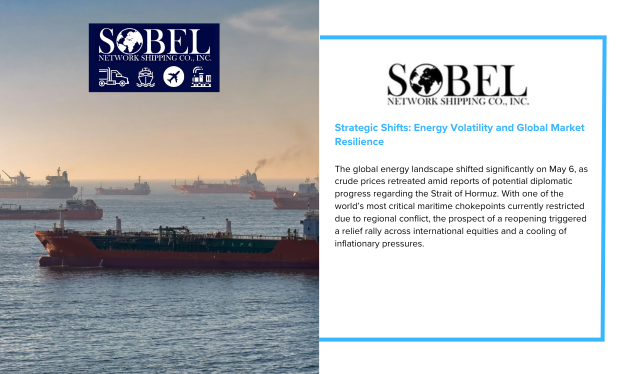
The global energy landscape shifted significantly on May 6, as crude prices retreated amid reports of potential diplomatic progress regarding the Strait of Hormuz. With one of the world’s most critical maritime chokepoints currently restricted due to regional conflict, the prospect of a reopening triggered a relief rally across international equities and a cooling of inflationary pressures.
Energy Markets and Supply Chain Relief
The international standard, Brent crude, saw a sharp decline of 7.3%, settling near $102 per barrel. This follows a volatile week where prices surged above $115 due to the blockade of oil tankers exiting the Persian Gulf.
From an industry perspective, the Strait of Hormuz is vital for global energy security. A restoration of free passage would:
-
Normalize Supply: Allow stalled crude shipments to reach global customers.
-
Curb Inflation: Reduce the “war premium” currently baked into the costs of raw materials and logistics.
-
Ease Operational Costs: Directly benefit sectors with high fuel exposure, such as aviation and maritime shipping.
Global Equity Response
The market’s reaction was swift and optimistic. In the United States, major indexes like the S&P 500 and Nasdaq moved higher, driven by the dual tailwinds of lower energy costs and a robust corporate earnings season. European and Asian markets mirrored this sentiment, with notable record-breaking gains in Seoul.
Despite the volatility—where prices briefly dipped below $100 before rebounding on cautious rhetoric—investors appear to be weighing the potential for a ceasefire and the stabilization of commercial shipping routes.
AI and Corporate Performance as a Market Anchor
While geopolitical developments dominated the headlines, the underlying strength of the Technology and AI sectors provided a solid foundation for market growth.
-
Semiconductors & Infrastructure: Companies specializing in AI chip technology and data center hardware reported earnings that significantly exceeded analyst expectations, citing a continued surge in demand for high-performance computing.
-
Consumer Services: Profitability remains high in the healthcare, entertainment, and transportation sectors, with many firms raising their annual forecasts despite the broader macroeconomic uncertainties.
Fixed Income and Treasury Yields
In the bond market, the 10-year Treasury yield retreated to 4.35%. This movement suggests that investors are anticipating a cooling of inflation if energy prices remain suppressed. Lower yields are traditionally a positive signal for the broader economy, as they reduce borrowing costs for mortgages and business loans, potentially stimulating further capital investment.
Industry Outlook
The current market environment remains a tug-of-war between geopolitical risk and fundamental corporate strength. While the potential reopening of the Strait of Hormuz offers a glimmer of hope for supply chain normalization, the situation remains fluid. For logistics and energy professionals, the focus remains on navigating these price fluctuations while leveraging the efficiencies provided by emerging technologies.