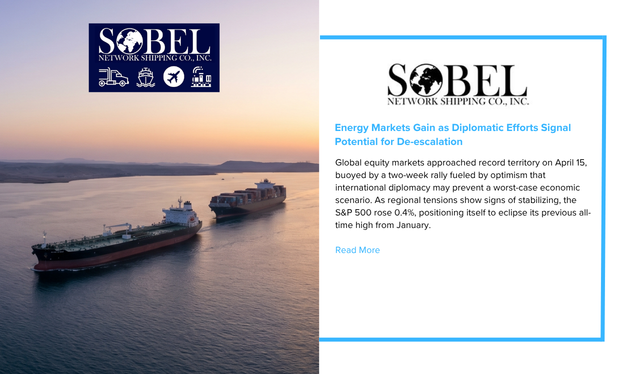
Global equity markets approached record territory on April 15, buoyed by a two-week rally fueled by optimism that international diplomacy may prevent a worst-case economic scenario. As regional tensions show signs of stabilizing, the S&P 500 rose 0.4%, positioning itself to eclipse its previous all-time high from January.
Following a technical correction in late March where the index dipped nearly 10%, the market has rebounded with a commensurate 10% gain. This recovery is largely predicated on the anticipation of restored energy flows through critical maritime corridors, specifically the Strait of Hormuz, which remains a vital artery for global oil distribution.
Energy and Bond Market Outlook
In the commodities sector, Brent Crude—the international benchmark—advanced 0.9% to $95.64. While prices remain significantly elevated compared to pre-conflict levels (roughly $70), they have receded from the $119 peak seen during the height of supply-chain anxieties.
In the bond market, Treasury yields remained relatively stable as mediators worked toward extending ceasefires and formalizing negotiations before upcoming deadlines. Market participants are watching these developments closely, as a successful diplomatic resolution could shift the global economic narrative from one of persistent inflation and high energy costs to one of managed recovery.
Corporate Performance and Economic Resilience
Despite the “noise” of geopolitical headlines, long-term stock valuations continue to track corporate profitability. Recent earnings reports underscore a resilient economy:
-
Financial Sector: Major banking institutions reported quarterly profits that exceeded analyst expectations, citing robust consumer spending and a sturdy domestic infrastructure.
-
Technology & AI: After a volatile start to 2026, tech shares saw a recovery. Investors are recalibrating their positions on companies heavily invested in artificial intelligence, moving past initial concerns over capital expenditure and obsolescence.
-
Infrastructure Pivot: Notable market activity was seen in companies pivoting toward AI compute infrastructure, reflecting a broader industrial trend of aligning traditional business models with high-growth technology sectors.
The Path Ahead
While the current rally suggests a return to fundamental-driven investing, caution remains. Historically, markets have seen similar gains erased when diplomatic expectations are not met. However, with analysts forecasting continued growth and many sectors appearing more attractively valued than they were in Q1, there is a “compelling opportunity” for strategic shifts into technology and growth-oriented assets.
As we look toward the remainder of the year, the focus for industry professionals remains on two pillars: the successful navigation of global energy logistics and the sustained growth of corporate earnings in an increasingly AI-integrated economy.