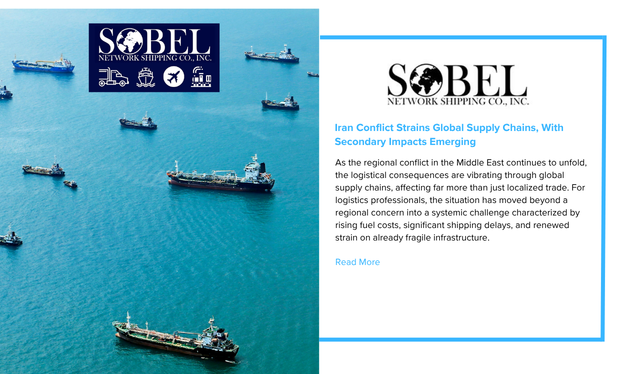
As the regional conflict in the Middle East continues to unfold, the logistical consequences are vibrating through global supply chains, affecting far more than just localized trade. For logistics professionals, the situation has moved beyond a regional concern into a systemic challenge characterized by rising fuel costs, significant shipping delays, and renewed strain on already fragile infrastructure.
Escalating Maritime and Air Disruptions
Across major trade lanes, the operational environment is becoming increasingly complex. Maritime traffic is facing severe bottlenecks as vessels are forced to idle or undergo lengthy rerouting to avoid high-risk corridors like the Strait of Hormuz. This geographic shift doesn’t just add days to a schedule; it compounds fuel consumption and alters port arrival sequences globally.
Concurrently, airspace restrictions are forcing cargo carriers to take circuitous routes. These deviations increase “ton-mile” costs and tighten available capacity, leading to a general climb in freight rates across sea, air, and land modalities.
Industrial Ripple Effects
The disruption is manifesting in critical industry verticals:
-
Pharmaceuticals: Lead times for exports out of South Asia have extended, threatening lean inventory models.
-
Petrochemicals: Supply chains for plastics and fertilizers are tightening as feedstock movement becomes less predictable.
-
Advanced Manufacturing: Sourcing for semiconductor inputs is under pressure, creating a high probability of “just-in-case” inventory surcharges and price hikes for end-users.
The Hidden Logistics Toll: Maintenance and Support
While freight rates and fuel surcharges are the most visible metrics, a more insidious challenge is emerging in vessel and fleet maintenance. Airspace closures and travel volatility are hindering the “invisible” support network—the movement of specialized engineers, spare parts, and diagnostic tools required to keep fleets operational.
This creates a “double-barrelled hit”: longer transit times increase the wear and tear on equipment, while the logistical barriers to servicing that equipment grow higher. The result is a cycle of reduced operational efficiency and heightened risk, often forcing vessels to divert or face extended stays in port for routine repairs.
Strategic Shifts: Nearshoring and Infrastructure
Beyond immediate tactical responses, the conflict is accelerating a strategic reassessment of supply chain architecture. Sustained fuel price volatility is forcing a shift in distribution philosophy.
If high transportation costs persist, we expect to see:
-
Inventory Decentralization: A move away from massive, centralized hubs toward smaller, “infill” logistics spaces located closer to urban consumer bases to minimize the “last mile” fuel burn.
-
Regional Production: Increased viability for energy-producing regions to serve as manufacturing anchors.
-
Hedged Transportation: A potential acceleration in the adoption of electric vehicle fleets for short-haul drayage to mitigate exposure to fossil fuel markets.
The Reality of the Energy Transition
The conflict serves as a sobering reminder of the current limitations regarding alternative fuels. While the industry has made strides in LNG, methanol, and ammonia, these solutions remain geographically tethered to specific, developed bunkering hubs.
During periods of high-intensity disruption, logistics operators are frequently forced back onto conventional fuel systems. This is not a lack of will, but a matter of practical necessity; the existing global infrastructure is not yet at a point where it can be bypassed. The energy transition is currently operating as a layer on top of traditional systems, rather than a full replacement, leaving the industry still highly sensitive to geopolitical shocks.
Summary for Professionals
The current landscape is a test of systemic resilience. With fuel costs climbing and shipping networks slowing, the primary objective for logistics managers is now adaptive visibility. The ability to reroute assets and recalibrate inventory in real-time is no longer a competitive advantage—it is a requirement for survival in a strained global trade environment.