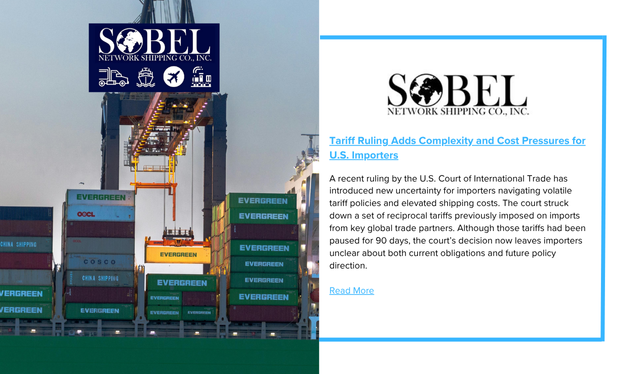
A recent ruling by the U.S. Court of International Trade has introduced new uncertainty for importers navigating volatile tariff policies and elevated shipping costs. The court struck down a set of reciprocal tariffs previously imposed on imports from key global trade partners. Although those tariffs had been paused for 90 days, the court’s decision now leaves importers unclear about both current obligations and future policy direction.
Operational Confusion Among Importers
Many importers had already been rerouting supply chains and adjusting shipping schedules following a recent easing of tensions between major trade partners. However, the new ruling has created additional questions around tariff liability and supply chain timing, prompting hesitation in procurement and logistics planning.
Rising Freight Costs and Capacity Challenges
Spot rates for 40-foot containers from China to the U.S. West Coast have surged 17% in just two weeks, reaching over $3,000 per container according to industry data. Analysts forecast that rates may double—or exceed that threshold—due to increased demand as importers rush to secure space before potential policy changes take effect.
This spike follows months of demand instability, during which ocean carriers reduced transpacific capacity. Reinstating those services is expected to take weeks, with full normalization delayed until midsummer. Some shipments are already being pushed to July sailing dates as container space fills rapidly.
Small Businesses Face Uneven Pressure
Smaller importers face even steeper pricing challenges, lacking the volume leverage of larger companies. Many are encountering last-minute surcharges and being asked to pay additional premiums to secure bookings or guarantee container placement. Some businesses have reported shipping costs rising by thousands of dollars per container in a matter of days.
Navigating an Unpredictable Trade Landscape
Industry experts emphasize that the lack of clarity in trade policy is driving reactive decisions. Importers are accelerating shipments at the first sign of an open logistics window, further contributing to port congestion and freight rate volatility.
As the appeal process for the tariff ruling unfolds, trade and logistics professionals await further guidance on whether levies already paid will be refunded and how ongoing shipments will be affected. Until then, unpredictability remains the defining challenge for international supply chain management.