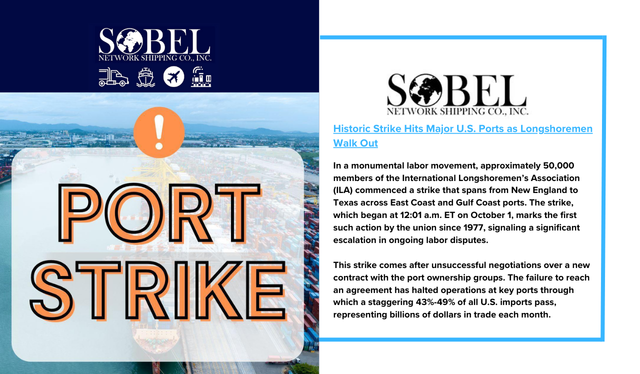
In a monumental labor movement, approximately 50,000 members of the International Longshoremen’s Association (ILA) commenced a strike that spans from New England to Texas across East Coast and Gulf Coast ports. The strike, which began at 12:01 a.m. ET on October 1, marks the first such action by the union since 1977, signaling a significant escalation in ongoing labor disputes.
This strike comes after unsuccessful negotiations over a new contract with the port ownership groups. The failure to reach an agreement has halted operations at key ports through which a staggering 43%-49% of all U.S. imports pass, representing billions of dollars in trade each month. This disruption is expected to have a profound impact on supply chains and trade flows across the nation.
The ILA, North America’s largest maritime union, turned down the latest proposal from the United States Maritime Alliance (USMX), despite the offer including a near 50% wage increase spread over six years. The union’s decision to reject the offer and proceed with the strike reflects broader concerns among workers about conditions and terms that go beyond just wage increases.
The impact of this strike is set to ripple across various sectors of the economy, affecting everything from retail inventories to international shipping routes. As negotiations continue to stall, the eyes of the world are on these crucial ports, waiting to see how one of the most significant labor actions in recent decades will unfold. Businesses and consumers alike are bracing for the effects of this disruption, hoping for a swift resolution to the standoff that restores normalcy to the channels of U.S. commerce.