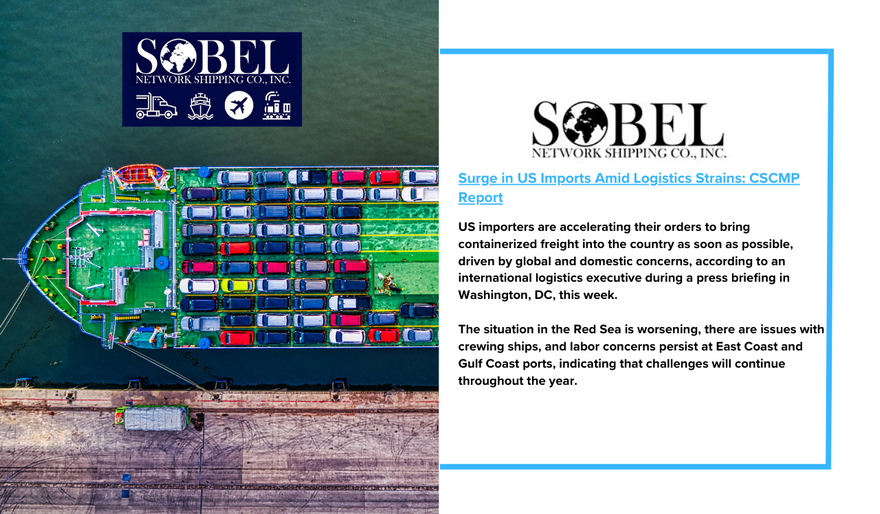
US importers are accelerating their orders to bring containerized freight into the country as soon as possible, driven by global and domestic concerns, according to an international logistics executive during a press briefing in Washington, DC, this week.
The situation in the Red Sea is worsening, there are issues with crewing ships, and labor concerns persist at East Coast and Gulf Coast ports, indicating that challenges will continue throughout the year.
In May, US laden imports from Asia increased by 6.7%, according to data from PIERS, a sister product of the Journal of Commerce within S&P Global. Earlier this month, US retailers adjusted their import forecasts upwards for each month through September.
While international logistics providers are experiencing a rise in ocean freight, surface transportation modes are still waiting for these imports to filter down to intermodal containers and tractor-trailers.
Slow growth is expected until new economic drivers are identified, though it remains unclear what these changes might entail. Interest rate adjustments are anticipated to play a crucial role, potentially influencing housing starts and related economic activities.
Truck rates are beginning to firm up slightly based on interactions with shippers, and if volumes increase, this trend is expected to continue. Early signs of this trend include increased spot market truckload volumes in May and higher truck tonnage reported by DAT Freight & Analytics and the American Trucking Associations.
However, a return to the growth levels seen during the pandemic is not anticipated. Increased spending on nondurable consumer goods is expected, though a sharper rise in US freight demand will likely hinge on lower interest rates.
Shippers at the State of Logistics event noted that they are dealing with shifting demand levels and new supply chain complexities. For instance, by November 27, the US Federal Drug Administration will require pharmaceutical manufacturers to track every product at the package level, prompting a move towards more automation due to labor shortages.
Retailer Bath & Body Works, which has a predominantly domestic supply chain, launches about 7,000 products annually. The company emphasizes the need for strong supply chain discipline and the ability to continually reforecast to manage challenges effectively.
Overall, supply chains are becoming more complex. Growth is being seen in private fleets and dedicated trucking businesses as shippers seek more control over deliveries. Despite a slight drop in spending on private and dedicated fleets last year, the decline was much smaller compared to the significant drop in for-hire truckload spending.
Shippers are increasingly recognizing that volatility is a permanent aspect of the current logistics landscape. As a result, they are rethinking their supply chains to add more flexibility and options, acknowledging that risks remain high and the future holds uncertainties.