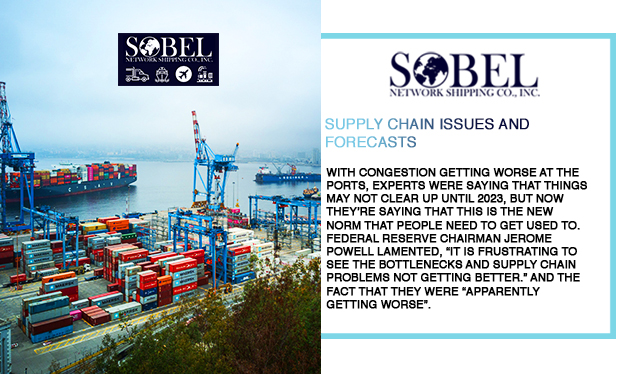
With congestion getting worse at the ports, experts were saying that things may not clear up until 2023, but now they’re saying that this is the new norm that people need to get used to. Federal Reserve Chairman Jerome Powell lamented, “It is frustrating to see the bottlenecks and supply chain problems not getting better.” And the fact that they were “apparently getting worse”.
With spot ocean freight rates to peak just after a golden week in China, falling back, Asia-USWC spot rates are triple what predictions said they would be, despite the recent dip. Consistently being far too conservative in their forecasts, Liner companies have had to scramble to upgrade their guidance more than twice the initial expectations. But will the entirety of 2022 be a peak season?
The Port of Los Angeles Executive Director Gene Seroka stated, “We’ve seen the highest level of output from factories in Asia in recorded history, yet they’re still behind on orders. Year over year, the trans-Pacific trade has seen a 30% increase in vessel capacity, and we still leave containers behind in Asia. It’s not just the three alliances and their carriers. We have no less than 10 new entrants to the trade, and we’ve also seen a handful of major U.S. retailers charter their own vessels.”
Things are complicated further as the current labor contract expiring July 1, 2022, between the USWC dockworkers union and the association representing terminal employers has yet to be renegotiated. The last time something like this happened was in 2014-15 when the ports of LA/LB’s controversial contract negotiations caused issues leading to a surge in container ships at anchor in the first quarter of 2015. The current anchorage situation has already lasted over three times as long and put 4.8 times as many container ships at anchor. This worst-case situation layered on top of import-driven congestion is causing fear across the board going into 2022.
How will it end? If demand declines, the congestion would ease. Even Seroka states, “There will come a day when we start moving more of our discretionary income back into the services sector. We’re not quite there yet. We’re still spending a lot of our money on retail goods. But when we get there, I think we’re going to see a leveling off of imports. It’s not going to go off a cliff, but we’ll see money go back into the services sector.”
Here at Sobel, we will continue to navigate these difficult waters with our clients, making it as easy as possible for them to deal with the supply chain crunches, bottlenecks, and labor issues. As these problems arise Sobel is coming up with solutions to help aid the process, as well as lessen the hassle by being there for you and simplifying the process by taking the weight off your shoulders when it comes to freight forwarding. If you have any questions contact your Sobel representative today.