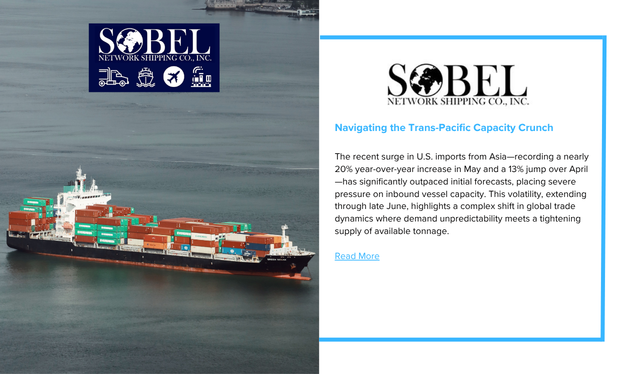
The recent surge in U.S. imports from Asia—recording a nearly 20% year-over-year increase in May and a 13% jump over April—has significantly outpaced initial forecasts, placing severe pressure on inbound vessel capacity. This volatility, extending through late June, highlights a complex shift in global trade dynamics where demand unpredictability meets a tightening supply of available tonnage.
Drivers of the Early Peak Season
Several converging factors have accelerated the typical peak season, leading shippers to frontload inventory:
-
Proactive Cost Management: Importers are moving goods early to mitigate the impact of upcoming increases in bunker fuel surcharges and impending tariff adjustments.
-
Strategic Inventory Planning: With a typical lead time of eight to 10 weeks from origin to shelf, retailers are positioning stock now to ensure availability for late-summer consumer demand.
-
Shifting Consumer Spending: Data suggests a pivot back toward physical goods—particularly in home improvement, outdoor leisure, and sporting goods—as inflationary pressures in travel and experiences influence household budgets.
-
Financial Reporting Cycles: Some organizations are strategically adjusting cargo arrivals to balance quarterly earnings reports, contributing to localized surges in volume.
The Capacity Challenge
The current “space crunch” is exacerbated by broader changes in how ocean carriers manage their global fleets:
-
Strategic Redeployment: Carriers have increasingly shifted capacity from the trans-Pacific trade to more profitable lanes, including Asia-Europe and South American routes, in response to earlier rate stabilization in those markets.
-
Operational Disruptions: Global port congestion and the widespread dislocation of equipment—driven by geopolitical instability and major trade route diversions—have reduced effective vessel capacity.
-
Alliances and Network Density: Realignment within global carrier alliances, combined with a higher demand for ships to maintain service frequency, has further strained available tonnage.
-
Equipment Inefficiency: Industry data indicates that the ratio of empty containers in the global network remains elevated compared to historical averages, requiring more equipment to move the same amount of cargo and further tightening the supply chain.
Outlook for Shippers
With vessel idling at historic lows and charter rates remaining firm, the current environment remains highly sensitive to demand spikes. As carriers prioritize aggressive rate management to maximize profitability in a volatile market, the industry continues to face the dual pressure of limited supply and erratic demand.
For shippers, this underscores the necessity of agile supply chain planning and proactive coordination to secure space in an environment where historical forecasting models are becoming increasingly difficult to rely upon.