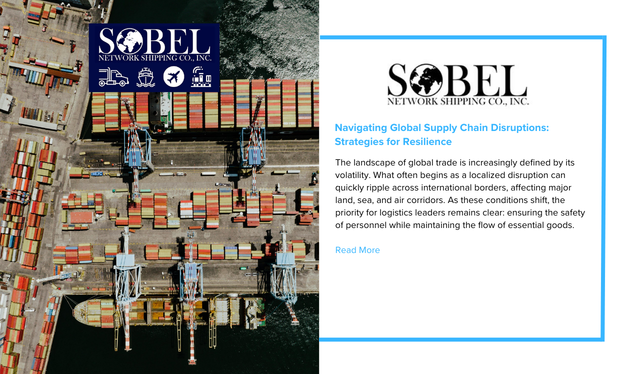
The landscape of global trade is increasingly defined by its volatility. What often begins as a localized disruption can quickly ripple across international borders, affecting major land, sea, and air corridors. As these conditions shift, the priority for logistics leaders remains clear: ensuring the safety of personnel while maintaining the flow of essential goods.
Prioritizing Safety in Unpredictable Environments
In any crisis, the human element takes precedence over logistics. Protecting the well-being of teams on the ground—whether in terminals, ports, or offices—is the foundational requirement for operational continuity. Organizations must maintain a “safety-first” culture to navigate the uncertainty that accompanies regional instability, ensuring that colleagues and communities are supported through periods of transition.
Maintaining Trade Flows Through Adaptive Solutions
When traditional routes are compromised, flexibility becomes a company’s greatest asset. Businesses managing significant cargo volumes often find themselves in difficult positions, requiring creative problem-solving to keep supply chains moving. Effective strategies currently include:
-
Temporary Storage: Utilizing secure holding facilities until routes stabilize.
-
Cargo Redirection: Identifying alternative ports of entry to bypass high-risk zones.
-
Intermodal Shifts: Leveraging trucking and land-bridge solutions to move cargo across regions when sea lanes are restricted.
By focusing on stability and workable alternatives, logistics providers can help customers navigate even the most unpredictable environments.
The Prioritization of Essential Goods
During periods of restricted capacity or “de facto” closures of major transit points, a tiered approach to cargo is often necessary. To meet fundamental societal needs, logistics networks must prioritize:
-
Food and Perishables
-
Medical Supplies and Pharmaceuticals
-
Critical Infrastructure Components
By securing specialized transport capacity—such as dedicated trucking routes from peripheral ports—the industry can ensure that life-sustaining supplies reach their destinations despite regional bottlenecks.
The Emerging Challenge: Global Fuel Distribution
A significant secondary effect of regional instability is the impact on global fuel supplies. While total global reserves may be sufficient, the distribution of marine and aviation fuel can become uneven.
Because a substantial percentage of the world’s fuel originates from specific hubs, any local disruption poses a risk to the consistency of global shipping networks. Proactive steps, such as redistributing fuel reserves and optimizing the bunkering supply chain, are essential to protect the long-term stability of ocean and air operations.