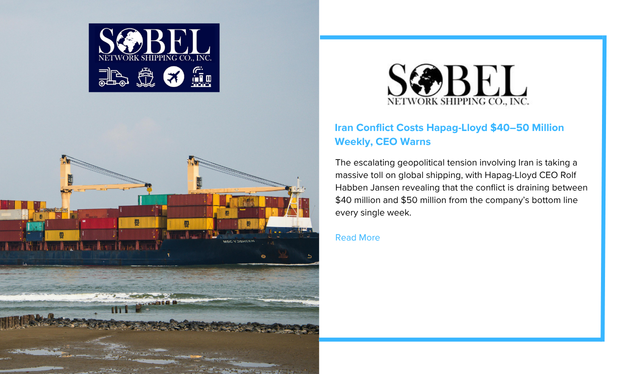
The escalating geopolitical tension involving Iran is taking a massive toll on global shipping, with Hapag-Lloyd CEO Rolf Habben Jansen revealing that the conflict is draining between $40 million and $50 million from the company’s bottom line every single week.
During a recent earnings call, Habben Jansen detailed a landscape of sharply rising operational hurdles. “Costs are increasing sharply,” he noted, citing a spike in bunker fuel prices, surging insurance premiums, and mounting expenses related to storage and inland transportation.
Financial Performance and Market Pressures
The financial strain comes as the German shipping giant reported a dip in its latest fiscal results. Operating profit fell to $3.5 billion, down from $4.9 billion in 2025. The company attributed this decline to a combination of these higher “war-related” costs and an industry-wide issue of excess capacity.
“We are definitely looking into [fuel supplies], because we also see that there is potentially a risk of shortage,” Habben Jansen added. “Asia is not one of our biggest bunkering locations, but it is certainly something to keep an eye on.”
Operations Under Siege
The carrier has been forced into significant tactical shifts to protect its fleet and crew. Key developments include:
-
Route Suspensions: Services have been halted through the Strait of Hormuz and the Red Sea-Suez Canal route.
-
Stranded Vessels: Six ships, representing a total capacity of 25,000 TEU (twenty-foot equivalent units), remain stuck in the Persian Gulf.
-
Regional Impact: While the liner has ceased calls to ports inside the Gulf, it continues to service Salalah, Oman, and Jeddah, Saudi Arabia.
The Long Road Ahead
Although Hapag-Lloyd has introduced emergency surcharges to help recover these mounting expenses, the CEO cautioned that there is a significant delay in seeing those returns.
Perhaps most concerning for the global supply chain is the company’s outlook on the Red Sea. Habben Jansen signaled that a quick resolution is unlikely, stating that the most realistic scenario involves the Red Sea remaining largely closed through the remainder of 2026. Currently, approximately 50% of Hapag-Lloyd’s contract freight to the region remains exposed to these ongoing disruptions.