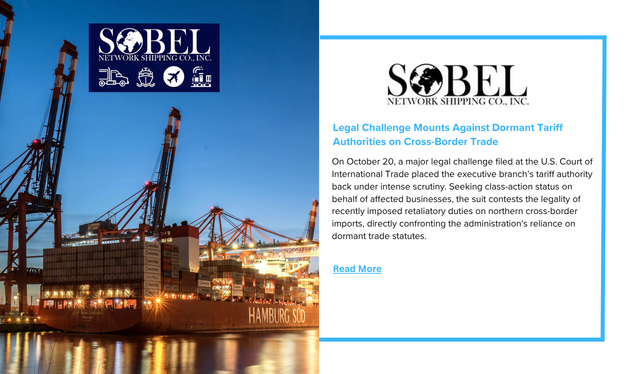
On October 20, a major legal challenge filed at the U.S. Court of International Trade placed the executive branch’s tariff authority back under intense scrutiny. Seeking class-action status on behalf of affected businesses, the suit contests the legality of recently imposed retaliatory duties on northern cross-border imports, directly confronting the administration’s reliance on dormant trade statutes.
At the center of the dispute is Section 338 of the Tariff Act of 1930. The complaint asserts that this statutory mechanism represents an abandoned approach to unilateral retaliation that was effectively displaced by modern legislative frameworks, particularly Section 301 of the Trade Act of 1974. Because contemporary trade statutes establish specific procedural safeguards—such as formal investigations, interagency reviews, and structured public comment periods—the action contends that reviving century-old provisions circumvents standard administrative governance.
Beyond broader statutory arguments, the legal filing challenges several procedural and substantive aspects of the duties:
-
Absence of Actionable Discrimination: The measures cited to justify the duties do not constitute genuine discrimination against domestic commercial interests, but rather reflect reciprocal policy adjustments in ongoing bilateral trade matters.
-
Statutory Notice Violations: The governing statute requires a mandatory 30-day waiting period between the publication of targeted tariff lists and the actual assessment of duties. Enforcement in this instance began within a fraction of that required timeframe, denying importers adequate time to adjust supply arrangements.
-
Constitutional Separation of Powers: The authority to impose tariffs and regulate foreign commerce resides fundamentally with the legislature. Unrestricted executive application of historic trade mechanisms raises fundamental questions under the non-delegation doctrine.
Operational and Supply Chain Implications
For cross-border shippers, customs brokers, and distribution networks, the sudden implementation of these supplemental duties has caused immediate disruption. Affected companies face steep, unbudgeted duty liabilities that cannot be easily absorbed or passed along on short notice. Because the tariff schedules extend well beyond the original disputes, food distributors, component manufacturers, and logistics partners have had to re-evaluate landed costs across multiple commodity lines.
The requested relief includes an injunction to halt collection alongside full duty refunds with interest. While judicial review proceeds, trade compliance teams should maintain strict audit trails for all affected entries, monitor customs liquidations, and evaluate the timing of administrative protests to preserve recovery options should the tariffs be declared unlawful.