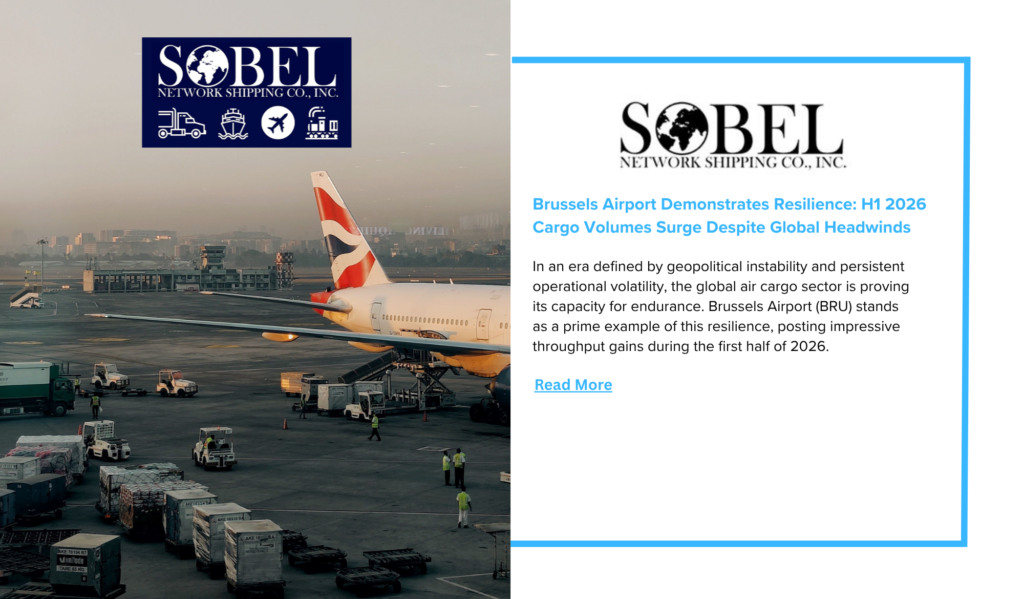
In an era defined by geopolitical instability and persistent operational volatility, the global air cargo sector is proving its capacity for endurance. Brussels Airport (BRU) stands as a prime example of this resilience, posting impressive throughput gains during the first half of 2026. By strategically diversifying its market reach and leaning into multimodal connectivity, BRU has reinforced its status as a critical European logistics gateway, even as the industry navigates significant supply chain disruptions.
H1 2026 Performance: Strategic Growth Across Segments
For the first half of 2026, Brussels Airport processed nearly 420,000 tonnes of cargo, an 8.3% increase year-over-year. This growth trajectory underscores the success of the airport’s development model, which prioritizes a balanced mix of commodities and diverse geographical markets.
The breakdown of the performance highlights the shifting nature of current freight flows:
-
Full Freighter Segment: Recorded robust growth of 16.7%, signaling strong demand for dedicated air freight capacity.
-
Trucked Cargo: Surged by 16.2%, a testament to the increasing reliance on integrated, multimodal logistics solutions to bridge regional gaps.
-
Belly Cargo: Remained nearly flat with a 0.1% increase. While typically a volume driver, this segment continues to feel the pressure of redirected flight paths and reduced frequencies caused by the ongoing conflict in the Middle East.
June Momentum: Efficiency Over Flight Volume
The positive trend accelerated in June 2026, with total cargo volumes climbing 12.2% to reach 70,895 tonnes. Notably, this throughput increase occurred against a backdrop of declining cargo flight movements (-4.9%), indicating a significant improvement in load factors and operational efficiency.
Key insights from the June data include:
-
Segment Performance: The freighter segment remained a primary driver (+16.5%), while trucked cargo saw an exceptional spike of 42.4%. Belly cargo rebounded in June, growing by 12.2% following a softer performance in May.
-
Key Trade Lanes: North America and Asia remain the vital pillars of BRU’s import and export activities, with North America showing particularly strong growth momentum.
Strategic Outlook for Logistics Stakeholders
Despite external pressures—such as regional conflicts and industrial actions—Brussels Airport continues to invest heavily in the modernization of its cargo zone. For logistics operators, this signals a commitment to long-term scalability and the infrastructure necessary to navigate an increasingly complex global trade environment.
As we move into the second half of 2026, the data from Brussels serves as a crucial barometer for the industry: success is increasingly found by those who prioritize agility, optimize multimodal nodes, and remain steadfast in their commitment to infrastructure investment. For shippers and freight forwarders alike, BRU’s ability to drive volume growth while maintaining operational efficiency makes it an essential partner in managing today’s volatile supply chains.